


Page 18 - Dainfern Nature Association Booklet
P. 18
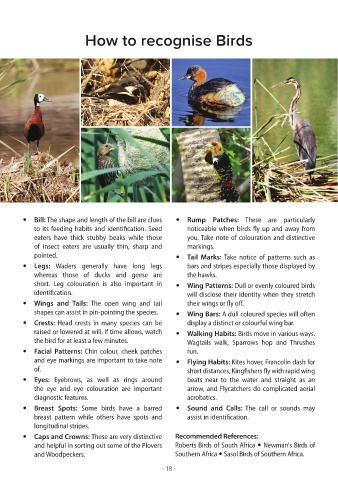
How to recognise Birds
Bill: The shape and length of the bill are clues Rump Patches: These are particularly
to its feeding habits and identification. Seed noticeable when birds fly up and away from
eaters have thick stubby beaks while those you. Take note of colouration and distinctive
of insect eaters are usually thin, sharp and markings.
pointed. Tail Marks: Take notice of patterns such as
Legs: Waders generally have long legs bars and stripes especially those displayed by
whereas those of ducks and geese are the hawks.
short. Leg colouration is also important in Wing Patterns: Dull or evenly coloured birds
identification. will disclose their identity when they stretch
Wings and Tails: The open wing and tail their wings or fly off.
shapes can assist in pin-pointing the species. Wing Bars: A dull coloured species will often
Crests: Head crests in many species can be display a distinct or colourful wing bar.
raised or lowered at will. If time allows, watch Walking Habits: Birds move in various ways.
the bird for at least a few minutes. Wagtails walk, Sparrows hop and Thrushes
Facial Patterns: Chin colour, cheek patches run.
and eye markings are important to take note Flying Habits: Kites hover, Francolin dash for
of. short distances, Kingfishers fly with rapid wing
Eyes: Eyebrows, as well as rings around beats near to the water and straight as an
the eye and eye colouration are important arrow, and Flycatchers do complicated aerial
diagnostic features. acrobatics.
Breast Spots: Some birds have a barred Sound and Calls: The call or sounds may
breast pattern while others have spots and assist in identification.
longitudinal stripes.
Caps and Crowns: These are very distinctive Recommended References:
and helpful in sorting out some of the Plovers Roberts Birds of South Africa Newman's Birds of
and Woodpeckers. Southern Africa Sasol Birds of Southern Africa.
- 18 -

